A Weeknight Supper Built Around One Shared Dish
Plan a weeknight supper around one shared dish, with flexible sides and serving choices that welcome different appetites without adding kitchen stress.
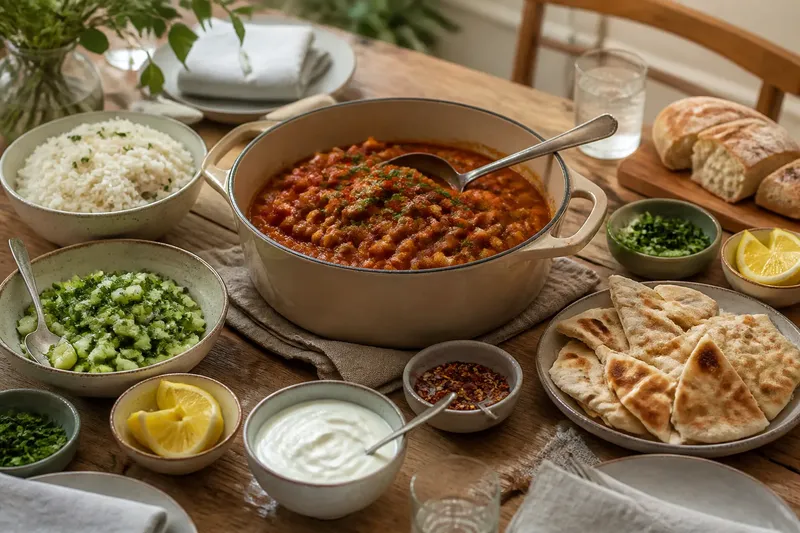
How do you host a weeknight supper without cooking a separate meal for every guest? Build it around one shared dish, then offer a few accompaniments so people can choose their portions and shape their plates. A tomato-braised chickpea stew, for instance, can serve as the main dish while rice, salad, and toppings give diners options.
Imagine you invite three friends after work: one wants a hearty plate, one prefers a light meal, and one avoids meat. You have time to make one entree, not several. A pot of tomato-braised chickpeas gives everyone a common dish, while separate accompaniments let each guest choose what to eat and how much.
Choose a shared centerpiece
Pick a dish that is easy to serve in different portions and still feels complete without elaborate last-minute work. Soups, braises, baked pasta, grain pilafs, and vegetable stews often fit. Individually cooked portions can also work, but require more coordination when guests have different preferences.
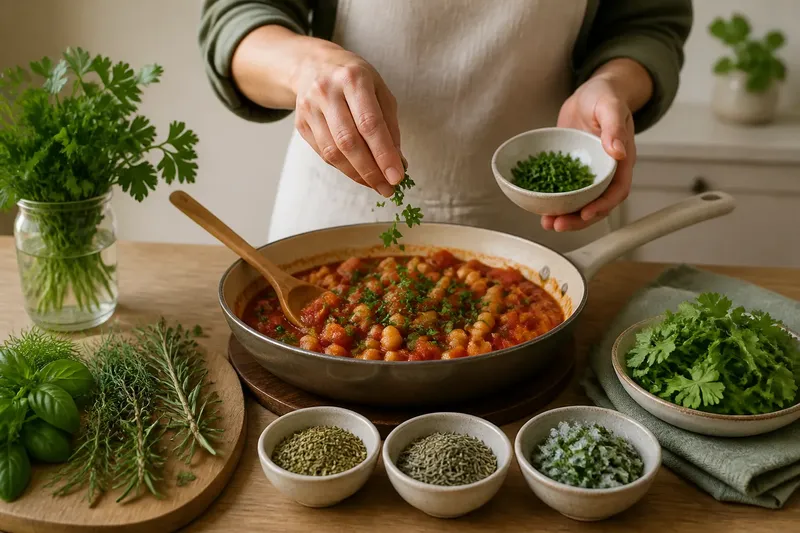
For the chickpea stew, simmer chopped onion, garlic, canned tomatoes, smoked paprika, and vegetable broth with chickpeas. A serving over rice makes a hearty plate; a smaller bowl with bread can suit someone who wants less. Think of the pot like a serving bowl at a family table: it gives everyone the same starting point without dictating the final plate.
Keep the base flavorful, then put optional accents on the table. Lemon wedges and chopped parsley add freshness; chili flakes bring heat, and plain yogurt adds richness. Check that optional ingredients suit your guests, and keep them separate from the main pot.
Offer useful choices
Choose accompaniments that add contrast without creating a second menu. A starch, something fresh or crisp, and a couple of finishing touches are usually enough. Use this check before shopping or cooking:
- Check for a filling option: If the centerpiece is not substantial on its own, serve rice or warm flatbread; otherwise, skip the extra starch.
- Check for freshness or crunch: If the main dish is soft and rich, add cucumber and parsley salad; if it is already bright and crisp, choose a simpler side or none.
- Check whether guests want more richness: If a dairy option suits everyone who may choose it, set out plain yogurt separately; otherwise, offer olive oil or leave this accent out.
- Check whether heat is optional: If guests may differ in their tolerance for spice, serve chili flakes or hot sauce separately; if everyone prefers a mild meal, omit them.
- Check whether a second texture helps: If the stew needs something crisp for dipping, toast pita pieces; if bread already covers that role, do not add crackers.
- Check for stated dietary restrictions or allergies: If a guest identifies one, ask what ingredients and cross-contact they need to avoid and plan accordingly; if the need is medical or unclear, ask the guest for guidance or consult a qualified professional.
Separate dishes make it easier for guests to choose without discussing every preference aloud. Put a clean serving spoon beside each accompaniment, and use a separate utensil for the main pot. For allergy-related food-safety questions, follow product labels and local guidance.
Keep timing flexible
Choose dishes that can wait briefly if someone arrives late. Prepare the chickpea stew first, then use its simmering time to cook rice according to its package directions, chop salad ingredients, and set out bread and toppings. Keep hot food at a safe temperature and follow food-safety guidance for storing or reheating it.
Set out the serving bowls and utensils before guests arrive. A heavy pot works for serving stew; a separate bowl lets guests decide how much rice to take. If counter or table space is limited, arrange the shared dishes on a nearby counter and leave the eating area clear.
Say you have canned chickpeas, tomatoes, rice, cucumber, parsley, yogurt, lemon, and bread, and one guest tells you they avoid dairy. You cook the stew with the chickpeas, tomatoes, onion, garlic, paprika, and broth; cook the rice; and make a cucumber-parsley salad dressed with lemon. You set yogurt apart, along with bread and lemon wedges. The resulting meal gives the dairy-free guest stew, rice, salad, and bread, while others can add yogurt; the tradeoff is one extra serving bowl and a clearly separate topping, rather than a second entree.
Serve without directing
Put the main dish within easy reach and let guests serve themselves when the room and food allow. If you pass bowls, offer them without prescribing a portion. Keep an eye on what is running low, but refill only when useful; if the stew is nearly gone, mention the remaining sides so guests can decide whether they want more.
For the imagined supper, one friend takes chickpeas over rice, another chooses a smaller bowl with salad and bread, and the guest avoiding meat can eat the stew as prepared. The shared dish provides the meal’s center, but each person sets their own balance.
Questions about shared suppers?
What dish works best for a weeknight supper?
Choose a dish that portions easily and feels complete without complicated last-minute finishing, such as stew, soup, baked pasta, or a grain dish. Optional toppings help guests adjust flavor and texture at the table.
How many sides should I serve?
Start with a filling accompaniment, a fresh or crisp side, and one or two optional toppings. Add another dish only when it serves a clear need, such as a stated dietary preference.
How can I plan for different appetites?
Offer at least one filling accompaniment and one lighter option, then let guests choose their portions. Keep additional food accessible so no one has to request a particular serving size.
What if a guest has an allergy or dietary restriction?
Ask the guest privately what they need to avoid, including any cross-contact concerns, then plan the menu and serving setup accordingly. For medical questions or uncertainty about safe preparation, follow the guest’s guidance and consult a qualified professional.
Make the next meal easier
For a weeknight supper built around one shared dish, choose the centerpiece first, then add only the accompaniments that provide useful contrast or choice. Tomato-braised chickpeas can share the table with rice, salad, bread, and separate toppings without requiring several entrees.
After the meal, note what made serving straightforward: perhaps the stew went directly from pot to table, or the salad gave guests a lighter option. Use that observation to make your next weeknight supper easier to plan. The main phrase to keep in mind is weeknight supper with one shared dish: one common entree, with enough choice around it for guests to make a plate that suits them.