Why Toasted Spices Smell Different
Why toasted spices smell different comes down to how dry heat shifts aroma. Learn what to notice, which whole spices to toast, and when to skip the pan.
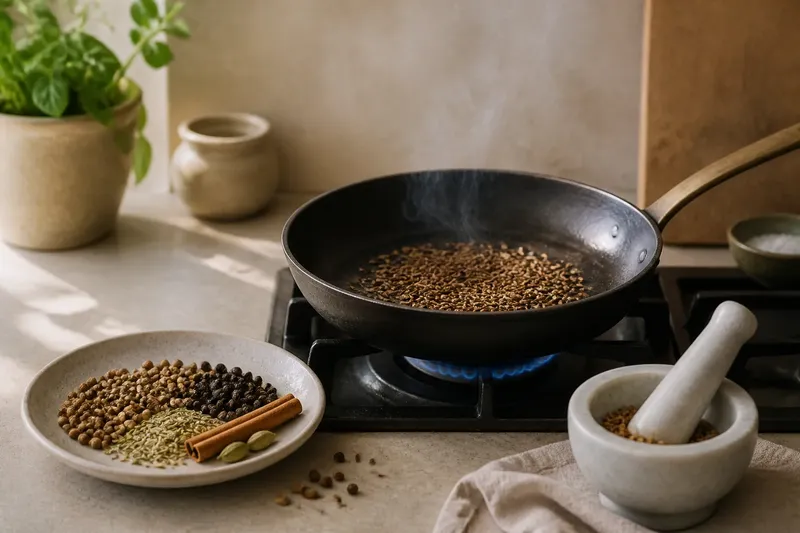
Why toasted spices smell different is easiest to notice with cumin: straight from the jar, its scent can seem sharp and dusty; warmed in a dry skillet, it can turn deeper and earthier. Dry-toasting changes the aroma through heat, and the shift depends on the spice, the pan, and how long the spice stays over the burner.
What dry heat changes
Spices hold aromatic compounds in seeds, bark, pods, and dried fruit. Warming them helps some of those compounds move into the air, where your nose can detect them. Heat can also change some compounds and create new aroma notes. The result is not just a stronger version of the scent from the jar.
Each spice has its own mix of compounds, so the change varies. Coriander seeds may give off citrusy, woody notes; cumin can become more earthy; peppercorns may smell more fragrant and rounded. Dry heat can make those differences easier to notice, but it does not produce one standard toasted flavor.
Dry-toasting is distinct because the spice touches a bare, hot pan rather than oil or water. That direct contact creates warm spots on the spice surface, while the rest of each seed or pod heats more gradually. A skillet is less like a switch that turns on one flavor and more like a row of small, uneven warm patches: movement and attention help keep one spot from getting too hot.
Why toast whole spices?
Whole seeds and peppercorns are useful candidates for dry-toasting because they are easy to move around the pan and can be crushed or ground afterward. A brief toast can add a roasted edge to a dish where the spice would otherwise have little time to release its aroma. It can also make some seeds easier to crush once they cool.
Ground spices expose much more surface to the pan, so fine particles can scorch before you notice a pleasant aroma. If a recipe calls for ground cumin, you can toast whole cumin seeds, cool them, then grind them in a mortar and pestle or spice grinder. If you only have ground cumin, add it directly to the recipe unless its instructions specifically call for dry-toasting.
Toast for a flavor purpose, not by habit. A long-simmered sauce or a dish with several assertive spices may already develop plenty of aroma. If you want a sharper, less roasted note, skip the dry pan.
How to judge the toast?
Set a dry skillet over gentle to moderate heat and spread the whole spices in a single layer. Stir or shake the pan so the pieces keep moving. Stay nearby and use scent as the main cue: the aroma should become distinct and appealing, not smoky or bitter. Some seeds may deepen slightly in color or make a faint crackle, but those signs are not universal.
Take the pan off the heat as soon as the aroma reaches the character you want. The skillet stays hot, so transfer the spices to a cool plate or bowl rather than leaving them in the pan. Do not wait for every seed to brown; naturally dark spices may show little color change, and a fragrant smell can arrive first.
If the batch smells acrid or smoky, the heat has gone too far. Pick out isolated scorched pieces if the rest still smells clean; if the burnt scent runs through the batch, set it aside and start again rather than adding that bitterness to the dish.
Which spices suit dry-toasting?
Whole cumin, coriander, fennel, mustard seed, and peppercorns are common choices. Their pieces are manageable in a skillet, and their aromas can become more prominent after brief dry heat. Whole spices still need individual attention: a small seed and a thick piece of bark do not warm at the same pace.
Cinnamon sticks, cardamom pods, and cloves can also be toasted when a recipe calls for it, but their shape and aroma differ from small seeds. Delicate flakes and ground powders can scorch quickly. Follow a recipe’s specific method when it gives one, and use the smell—not a fixed time or a universal color—as your guide.
Dry-toasting or blooming?
Dry-toasting warms spices in a bare skillet. Blooming warms them in fat, often as part of cooking onions or other ingredients. Fat carries aromatic compounds into the dish, while the bare pan gives the spice direct contact with dry heat. Neither method is automatically better; choose the one that matches the recipe and the flavor you want.
If a recipe directs you to add spices to hot oil, onions, or another ingredient, follow that sequence rather than toasting them separately first. The extra pan step can make them too dark by the time the rest of the dish cooks. For a late-added spice whose aroma should stand out, a brief toast may be useful if the recipe allows it.
Questions about toasted spices?
Should ground spices be dry-toasted?
Usually, add ground spices directly to the recipe or follow its directions for blooming them in fat. Powder has a large exposed surface and can scorch quickly in a bare pan. If the recipe specifically calls for dry-toasting powder, use low heat, stir constantly, and stop at the first clear fragrant change.
Should toasted spices cool before grinding?
Yes; spread them on a cool plate and let them reach room temperature before using a mortar and pestle or spice grinder. This makes the spices easier to handle and gives you a chance to check their aroma before grinding.
How should toasted spices be stored?
Keep cooled spices in a clean, dry, airtight container away from heat, moisture, and direct light. Grind only what the recipe needs when practical, since whole spices generally retain their aroma better than ground ones. Use toasted spices while their fresh aroma is still noticeable rather than preparing a large batch without a planned use.
When should dry-toasting be skipped?
Skip it when you want a bright, unroasted flavor, when the spice will simmer for a long time, or when the recipe already warms it in oil. Dry heat is an optional flavor choice, not a required opening move.
A worked spice choice
Say you are making lentil soup and have whole cumin seeds, a dry skillet, a plate, and a mortar and pestle. The recipe adds cumin near the start, but you want the seed’s earthy aroma to stand out: spread the seeds in the skillet, stir them over gentle heat until they smell warm rather than smoky, then move them to the plate. Once cool, crush them and add them as directed; the expected result is a more noticeable roasted cumin aroma. If you decide you want a cleaner cumin note instead, skip the skillet and add the seeds directly to the soup.
Keeping the aroma useful
Use a small batch you can move freely in the pan, and keep the plate ready before heating the spices. If the aroma develops faster than expected, lift the skillet off the burner and transfer the contents at once. That quick handoff matters because residual pan heat keeps working even after the flame is gone.
For a simple decision, consider three things: the flavor you want, how long the spice will cook, and whether it will already be warmed in fat. A brief dry toast is useful when you want a clear roasted note from a whole spice; otherwise, adding it directly to the dish may be the better fit.