Fresh, Dried or Frozen Herbs: Pick by the Job
Fresh, dried or frozen herbs suit different jobs. Choose the right form for your cooking time, desired texture, and need for a bright, distinctive finish.
Should you use fresh, dried or frozen herbs? Fresh, dried or frozen herbs each suit a different job: fresh leaves can finish a dish, dried herbs can blend into a simmer, and frozen herbs can go into cooked mixtures when soft texture is welcome. Choose by how the herb will be used, not just by what is in the pantry.
What each form offers
Fresh herbs keep their leafy shape and are easy to see and taste in a finished dish. Cutting them releases aroma, so chop them shortly before use when you want that clear, green character. Tender leaves such as parsley, cilantro, dill and basil are especially useful in uncooked sauces, salads and as a final addition.
Dried herbs are compact, shelf-stable seasonings. Their leaves are firmer than fresh ones, so they suit moist dishes that have time to soften them, such as soup, beans or tomato sauce. Crumble the leaves between your fingers as you add them to a pot to break up large pieces.
Frozen herbs are often chopped before freezing and may contain ice or added oil. They soften quickly and can release moisture, making them convenient in soups, fillings and pan sauces. They are less suited to a garnish that needs distinct, dry leaves.
Match the form to the dish
For a long-simmered dish, dried oregano, thyme, rosemary or sage can blend into the cooking liquid. Sturdy fresh sprigs also work; remove them before serving if you do not want the leaves in the finished dish. Tender fresh herbs usually make more sense near the end, when their color and leafy texture can remain apparent.
Use frozen herbs in cooked dishes where a soft texture is fine. If a frozen portion is coated in oil, account for that when adding other fat. For a cold dressing or dip, thaw the herbs separately and drain excess liquid if the mixture needs to stay thick.
Think of the forms like different brushes: one makes a crisp mark, another blends into the background, and a third is handy for filling in a cooked mixture. That distinction is about texture and timing, not about toasting. Dried herbs do not need to be toasted; their main advantage is that they can soften and mingle in moisture during cooking.
Choose by herb type
Thyme, oregano, rosemary and sage are common choices in dried form because their flavors can suit cooked dishes. Basil is often most vivid fresh, especially in uncooked food or added near the end, though dried basil can provide a familiar background in sauce. Parsley and cilantro are often used fresh for their leafy finish; frozen versions can work in cooked mixtures.
Dill and chives are delicate and often most distinct fresh. Dried dill can suit a dressing or a dish with time to soften, while frozen chives can work in a warm dip or filling. The dish still decides: if visible, tender leaves matter, choose fresh; if the herbs will be stirred into a moist cooked mixture, dried or frozen may fit.
How much should you use?
There is no exact conversion that works for every herb or product. Dried herbs are concentrated, but their strength varies with the cut and how they have been stored. Frozen products may be loose, packed into portions or mixed with oil. Start modestly, let the herbs mingle with the dish, then taste and adjust.
When adapting a recipe, preserve the herb’s role. If fresh leaves are stirred in just before serving, substituting dried herbs will change the texture and give a more blended flavor. For a simmered recipe that calls for dried herbs, fresh leaves can be added during cooking, with some tender herbs held back for the finish. Frozen herbs can replace some of the fresh herbs in cooked mixtures, but they will be softer.
A worked substitution
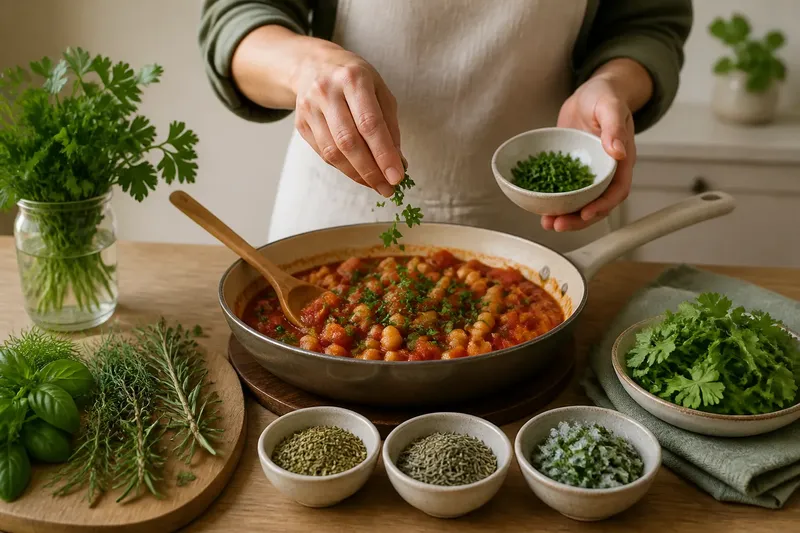
Say you are making a chickpea skillet with tomatoes and lemon. You have dried oregano, frozen cilantro and fresh parsley. Stir the oregano into the tomatoes early so it has time to soften. Add a small amount of frozen cilantro near the end, then chop the parsley and scatter it over the skillet at the table. The result is a blended herbal base, a soft cooked note and a distinct leafy finish. If you want the dish to have no visible leaves, skip the parsley; if you want a sharper fresh aroma, use more parsley and less frozen cilantro.
Storage and condition
Follow package directions for fresh and frozen herbs. Tender fresh bunches often keep well with cut stems in a little water and a loose cover; remove slimy or discolored leaves rather than chopping them into the bunch. Keep dried herbs in closed containers away from heat, light and moisture. Crush a leaf between your fingers: if its aroma is faint, it may add little to the dish.
Keep frozen herbs sealed in the freezer to limit exposure to air and odors. Take out only what you need and return the rest promptly. For any form, discard herbs that appear spoiled or have an off smell.
Fresh, dried or frozen herbs?
Can I add dried herbs at the end?
You can, but the leaves may stay firm and their flavor may not blend into the dish. If there is warm liquid or fat, give them time to soften before serving.
Should frozen herbs be thawed first?
Small amounts can usually go straight into a cooked dish, where they thaw as they warm. For a cold dip or dressing, thaw them separately and drain excess liquid if needed.
Can I use fresh herbs instead of dried?
Often, particularly in soups and sauces with enough moisture and cooking time. Add some during cooking, and reserve delicate leaves for the finish if you want their texture and aroma to stand out.
Which herb form works best as a garnish?
Fresh herbs are usually the best fit when you want distinct leaves with a tender texture. Frozen herbs soften as they thaw, while dried leaves work better mixed into food than used as a leafy garnish.
A quick choice at the stove
- Check whether the dish will simmer for a while; if it will, use dried herbs or a sturdy fresh sprig, and if it will not, add tender fresh herbs near the end.
- Check whether visible, tender leaves matter; if they do, choose fresh herbs, and if they do not, consider dried herbs for a blended result or frozen herbs in cooked food.
- Check whether the recipe is a cold dip or dressing; if it is, thaw frozen herbs separately and drain them, and if it is a cooked dish, add a small amount while it warms.
- Check the frozen package for oil; if oil is present, account for it in the dish, and if it is plain chopped herb, add it without adjusting for added fat.
- Check dried herbs by crushing a leaf and smelling it; if the aroma is faint, choose fresher stock or another herb, and if it is clear, add a modest amount and taste before adding more.
- Check fresh leaves for sliminess or discoloration; if either is present, remove affected leaves, and if the bunch looks sound, wash and dry only what you plan to use.
Fresh, dried or frozen herbs are easiest to choose when you match their texture to the finished dish and give each form a suitable place in the cooking. When a recipe leaves the choice open, decide whether you want leaves the eater can see, flavor that blends into the base, or a soft addition to a cooked mixture.